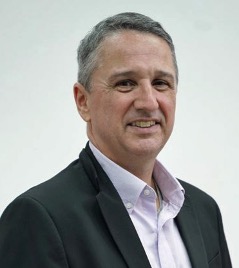



Prof. François Cooren

13/05/2025 (Tuesday) 13:00 ~ 16:30 E21B-G002 Global Vision, Local Action: Enhancing International Collaboration in Research and Outreach Abstract: In today’s knowledge economy, meaningful international collaboration is not just beneficial — it is essential. Drawing on my experience as a Canadian scholar and former president of the International Communication Association, this talk explores

Prof. François Cooren

08/05/2025 (Thursday) 15:00 ~ 16:00 E21B-G002 Thinking the World Communicatively: Passers, Media, and Agency Abstract: Key ideas are presented from the forthcoming book, Thinking the World Communicatively. Rather than seeing ourselves merely as actors, we are also passers—in-betweens through which others manifest and express themselves in actions and interactions. This perspective calls

Prof. Liang CHEN

29/04/2025 (Tuesday) 15:30-16:30 E21-3118 Vicarious Interaction in Online Health Consultation Services: The Effects of Generative AI’s Anthropomorphism and Social Support on Intended Responses Through Social Presence and Source Credibility Abstract: Drawing upon vicarious interaction and social support theory, we proposed that online users can acquire benefits from observing AI-human conversations. We examined

Prof. Jingwen ZHANG

10/04/2025 (Thursday) 13:00-14:00 E21B-G002 AI as Humans? Using LLMs to Synthesize Human Responses in Persuasive Contexts Abstract: Generative AI and LLMs are not only enhancing the efficiency of communication research; they are fundamentally reshaping how scholars observe and understand the intricacies of human communication processes and effects. By automating tasks that once

Prof. Anfan CHEN

27/03/2025 (Thursday) 13:00-14:00 E21B-G002  Un-coding AI in Everyday Life: Practices and Reasoning in AI Encounters  Abstract: Artificial intelligence technologies, particularly large language models (LLMs) that have emerged in recent years, have introduced new variables into the human communication context. Against this backdrop, human communication behaviors have undergone significant changes at the relational,

Prof. Zhijin ZHONG

06/03/2025 (Thursday) 11:00-12:00 E21B-G002 Academic Imagination and Exploration of Intelligent Communication (Talk in Mandarin) Abstract: Artificial intelligence (AI) is increasingly becoming a significant driving force, profoundly impacting both journalistic practices and academic research. This seminar will explore the new academic landscape that AI technologies have brought to the field of communication studies,

Dr. Patricia Jimenez

27/02/2025 (Thursday) 13:00-14:00 E21B-G002 Un-coding AI in Everyday Life: Practices and Reasoning in AI Encounters Abstract: Artificial intelligence (AI) has become an integral part of everyday life, shaping how lay users engage with technology in routine activities. This presentation explores how non-experts encounter, interpret, and navigate AI systems in everyday contexts, from

Prof. Beng Huat CHUA

14/02/2025 (Friday) 13:00-14:00 E21B-G002 Shallowness of Liberalism in Postwar, Postcolonial Asia  Abstract: A commonplace critique of Anglo-American university trained political scientists regarding political development of postwar, postcolonial nations in Asia is their lack of progress towards liberalism democracy. So much so that the recent book, From Development to Democracy: The Transformation of

Prof. Prakruti Ramesh

16/01/2025 (Thursday) 13:00-14:00 E21B-G002 Converging patterns, diverging scales? Comparing and connecting late-colonial and postcolonial Goa (India) and Macau (China) Abstract: This paper outlines a thematic and analytical basis for comparing the late-colonial and postcolonial experience of Goa and Macau, two former Portuguese enclaves and present-day leisure destinations in India and China respectively.

Prof. Michael Puett

15/01/2025 (Wednesday) 11:00-12:30 E21B-G002 Political Theory from a Global Perspective Abstract: Underlying many of the dominant theories in the social sciences and humanities has been an implicit (and often explicit) teleology in which Euro-American concepts that arose in the nineteenth and twentieth centuries are assumed to be normative.The goal of this talk